| Age | Commit message (Collapse) | Author | Lines |
|---|
|
|
|
|
|
|
|
compiler-errors:param-envs-with-inference-vars-are-cursed, r=jackh726
Don't call `with_reveal_all_normalized` in const-eval when `param_env` has inference vars in it
**what:** This slightly shifts the order of operations from an existing hack:
https://github.com/rust-lang/rust/blob/5b6ed253c42a69b93e7447fb0874a89ab6bc1cfb/compiler/rustc_middle/src/ty/consts/kind.rs#L225-L230
in order to avoid calling a tcx query (`TyCtxt::reveal_opaque_types_in_bounds`, via `ParamEnv::with_reveal_all_normalized`) when a param-env has inference variables in it.
**why:** This allows us to enable fingerprinting of query keys/values outside of incr-comp in deubg mode, to make sure we catch other places where we're passing infer vars and other bad things into query keys. Currently that (bbf33836b9adfe4328aefa108c421e670a3923b7) crashes because we introduce inference vars into a param-env in the blanket-impl finder in rustdoc :sweat:
https://github.com/rust-lang/rust/blob/5b6ed253c42a69b93e7447fb0874a89ab6bc1cfb/src/librustdoc/clean/blanket_impl.rs#L43
See the CI failure here: https://github.com/rust-lang/rust/actions/runs/4058194838/jobs/6984834619
|
|
The naming of `machine` only makes sense from a mir interpreter internals perspective, but outside users talk about the `target` platform
|
|
inference vars in it
|
|
|
|
|
|
- Accept `impl Into`
- Implement `From<>` for `ConstKind`
Note: this adds a dependency on `derive_more` (MIT license). It allows
to derive a lot of traits (like `From` here) that would be otherwise
tedious to implement.
|
|
Various cleanups around scalar layout restrictions
Pulled out of https://github.com/rust-lang/rust/pull/103724
|
|
Initial pass at expr/abstract const/s
Address comments
Switch to using a list instead of &[ty::Const], rm `AbstractConst`
Remove try_unify_abstract_consts
Update comments
Add edits
Recurse more
More edits
Prevent equating associated consts
Move failing test to ui
Changes this test from incremental to ui, and mark it as failing and a known bug.
Does not cause the compiler to ICE, so should be ok.
|
|
|
|
|
|
|
|
stop using `ty::UnevaluatedConst` directly
best reviewed commit by commit.
simplifies #99798 because we now don't have to expand `ty::UnevaluatedConst` to `ty::Const`.
I also remember some other places where using `ty::UnevaluatedConst` directly was annoying and caused issues, though I don't quite remember what they were rn '^^
r? `@oli-obk` cc `@JulianKnodt`
|
|
|
|
|
|
|
|
|
|
Use only ty::Unevaluated<'tcx, ()> in type system
r? `@lcnr`
|
|
|
|
|
|
|
|
|
|
|
|
|
|
|
|
There are several indications that we should not ZST as a ScalarInt:
- We had two ways to have ZST valtrees, either an empty `Branch` or a `Leaf` with a ZST in it.
`ValTree::zst()` used the former, but the latter could possibly arise as well.
- Likewise, the interpreter had `Immediate::Uninit` and `Immediate::Scalar(Scalar::ZST)`.
- LLVM codegen already had to special-case ZST ScalarInt.
So instead add new ZST variants to those types that did not have other variants
which could be used for this purpose.
|
|
|
|
|
|
|
|
There are two impls of the `Encoder` trait: `opaque::Encoder` and
`opaque::FileEncoder`. The former encodes into memory and is infallible, the
latter writes to file and is fallible.
Currently, standard `Result`/`?`/`unwrap` error handling is used, but this is a
bit verbose and has non-trivial cost, which is annoying given how rare failures
are (especially in the infallible `opaque::Encoder` case).
This commit changes how `Encoder` fallibility is handled. All the `emit_*`
methods are now infallible. `opaque::Encoder` requires no great changes for
this. `opaque::FileEncoder` now implements a delayed error handling strategy.
If a failure occurs, it records this via the `res` field, and all subsequent
encoding operations are skipped if `res` indicates an error has occurred. Once
encoding is complete, the new `finish` method is called, which returns a
`Result`. In other words, there is now a single `Result`-producing method
instead of many of them.
This has very little effect on how any file errors are reported if
`opaque::FileEncoder` has any failures.
Much of this commit is boring mechanical changes, removing `Result` return
values and `?` or `unwrap` from expressions. The more interesting parts are as
follows.
- serialize.rs: The `Encoder` trait gains an `Ok` associated type. The
`into_inner` method is changed into `finish`, which returns
`Result<Vec<u8>, !>`.
- opaque.rs: The `FileEncoder` adopts the delayed error handling
strategy. Its `Ok` type is a `usize`, returning the number of bytes
written, replacing previous uses of `FileEncoder::position`.
- Various methods that take an encoder now consume it, rather than being
passed a mutable reference, e.g. `serialize_query_result_cache`.
|
|
|
|
|
|
|
|
Include Refs in Valtree Creation
This adds references to `const_to_valtree`, which isn't used in the compiler yet, but after the previous changes we made to the thir and mir representations and this change we should be able to finally introduce them in the next PR.
I wasn't able to properly test this code, except indirectly by including a call of `const_to_valtree` in the code that currently creates constants (`turn_into_const_value`).
r? `@lcnr`
cc `@oli-obk` `@RalfJung`
|
|
|
|
|
|
|
|
|
|
|
|
|
|
Fix rustdoc const computed value
Fixes #85088.
It looks like this now (instead of hexadecimal):
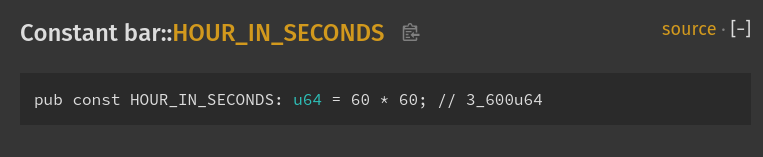
r? ````@oli-obk````
|
|
|
|
to avoid panic for invalid Unicode scalar values
|
|
`Decoder` has two impls:
- opaque: this impl is already partly infallible, i.e. in some places it
currently panics on failure (e.g. if the input is too short, or on a
bad `Result` discriminant), and in some places it returns an error
(e.g. on a bad `Option` discriminant). The number of places where
either happens is surprisingly small, just because the binary
representation has very little redundancy and a lot of input reading
can occur even on malformed data.
- json: this impl is fully fallible, but it's only used (a) for the
`.rlink` file production, and there's a `FIXME` comment suggesting it
should change to a binary format, and (b) in a few tests in
non-fundamental ways. Indeed #85993 is open to remove it entirely.
And the top-level places in the compiler that call into decoding just
abort on error anyway. So the fallibility is providing little value, and
getting rid of it leads to some non-trivial performance improvements.
Much of this commit is pretty boring and mechanical. Some notes about
a few interesting parts:
- The commit removes `Decoder::{Error,error}`.
- `InternIteratorElement::intern_with`: the impl for `T` now has the same
optimization for small counts that the impl for `Result<T, E>` has,
because it's now much hotter.
- Decodable impls for SmallVec, LinkedList, VecDeque now all use
`collect`, which is nice; the one for `Vec` uses unsafe code, because
that gave better perf on some benchmarks.
|
|
|
|
|
|
|
|
See #91867
This was mostly straightforward. In several places, I take advantage
of the fact that lifetimes are non-hygenic: a macro declares the
'tcx' lifetime, which is then used in types passed in as macro
arguments.
|
