| Age | Commit message (Collapse) | Author | Lines |
|---|
|
default data address space
|
|
|
|
|
|
|
|
Use `std::mem::{size_of, size_of_val, align_of, align_of_val}` from the
prelude instead of importing or qualifying them.
These functions were added to all preludes in Rust 1.80.
|
|
Make it so that every structured error annotated with `#[derive(Diagnostic)]` that has a field of type `Ty<'_>`, the printing of that value into a `String` will look at the thread-local storage `TyCtxt` in order to shorten to a length appropriate with the terminal width. When this happen, the resulting error will have a note with the file where the full type name was written to.
```
error[E0618]: expected function, found `((..., ..., ..., ...), ..., ..., ...)``
--> long.rs:7:5
|
6 | fn foo(x: D) { //~ `x` has type `(...
| - `x` has type `((..., ..., ..., ...), ..., ..., ...)`
7 | x(); //~ ERROR expected function, found `(...
| ^--
| |
| call expression requires function
|
= note: the full name for the type has been written to 'long.long-type-14182675702747116984.txt'
= note: consider using `--verbose` to print the full type name to the console
```
|
|
Stop reexporting ReprOptions from middle::ty
|
|
|
|
|
|
The previous commit updated `rustfmt.toml` appropriately. This commit is
the outcome of running `x fmt --all` with the new formatting options.
|
|
|
|
|
|
we don't know their sign so we cannot, in general, order them properly
|
|
|
|
|
|
|
|
Also rename `into_diagnostic_arg` as `into_diag_arg`, and
`NotIntoDiagnosticArg` as `NotInotDiagArg`.
|
|
|
|
|
|
|
|
make matching on NaN a hard error, and remove the rest of illegal_floating_point_literal_pattern
These arms would never be hit anyway, so the pattern makes little sense. We have had a future-compat lint against float matches in general for a *long* time, so I hope we can get away with immediately making this a hard error.
This is part of implementing https://github.com/rust-lang/rfcs/pull/3535.
Closes https://github.com/rust-lang/rust/issues/41620 by removing the lint.
https://github.com/rust-lang/reference/pull/1456 updates the reference to match.
|
|
Because it's almost always static.
This makes `impl IntoDiagnosticArg for DiagnosticArgValue` trivial,
which is nice.
There are a few diagnostics constructed in
`compiler/rustc_mir_build/src/check_unsafety.rs` and
`compiler/rustc_mir_transform/src/errors.rs` that now need symbols
converted to `String` with `to_string` instead of `&str` with `as_str`,
but that' no big deal, and worth it for the simplifications elsewhere.
|
|
|
|
|
|
|
|
|
|
|
|
|
|
|
|
|
|
|
|
The naming of `machine` only makes sense from a mir interpreter internals perspective, but outside users talk about the `target` platform
|
|
|
|
|
|
|
|
There are several indications that we should not ZST as a ScalarInt:
- We had two ways to have ZST valtrees, either an empty `Branch` or a `Leaf` with a ZST in it.
`ValTree::zst()` used the former, but the latter could possibly arise as well.
- Likewise, the interpreter had `Immediate::Uninit` and `Immediate::Scalar(Scalar::ZST)`.
- LLVM codegen already had to special-case ZST ScalarInt.
So instead add new ZST variants to those types that did not have other variants
which could be used for this purpose.
|
|
|
|
There are two impls of the `Encoder` trait: `opaque::Encoder` and
`opaque::FileEncoder`. The former encodes into memory and is infallible, the
latter writes to file and is fallible.
Currently, standard `Result`/`?`/`unwrap` error handling is used, but this is a
bit verbose and has non-trivial cost, which is annoying given how rare failures
are (especially in the infallible `opaque::Encoder` case).
This commit changes how `Encoder` fallibility is handled. All the `emit_*`
methods are now infallible. `opaque::Encoder` requires no great changes for
this. `opaque::FileEncoder` now implements a delayed error handling strategy.
If a failure occurs, it records this via the `res` field, and all subsequent
encoding operations are skipped if `res` indicates an error has occurred. Once
encoding is complete, the new `finish` method is called, which returns a
`Result`. In other words, there is now a single `Result`-producing method
instead of many of them.
This has very little effect on how any file errors are reported if
`opaque::FileEncoder` has any failures.
Much of this commit is boring mechanical changes, removing `Result` return
values and `?` or `unwrap` from expressions. The more interesting parts are as
follows.
- serialize.rs: The `Encoder` trait gains an `Ok` associated type. The
`into_inner` method is changed into `finish`, which returns
`Result<Vec<u8>, !>`.
- opaque.rs: The `FileEncoder` adopts the delayed error handling
strategy. Its `Ok` type is a `usize`, returning the number of bytes
written, replacing previous uses of `FileEncoder::position`.
- Various methods that take an encoder now consume it, rather than being
passed a mutable reference, e.g. `serialize_query_result_cache`.
|
|
|
|
Fix rustdoc const computed value
Fixes #85088.
It looks like this now (instead of hexadecimal):
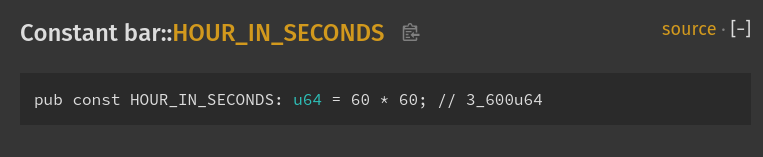
r? ````@oli-obk````
|
|
|
|
to avoid panic for invalid Unicode scalar values
|
|
`Decoder` has two impls:
- opaque: this impl is already partly infallible, i.e. in some places it
currently panics on failure (e.g. if the input is too short, or on a
bad `Result` discriminant), and in some places it returns an error
(e.g. on a bad `Option` discriminant). The number of places where
either happens is surprisingly small, just because the binary
representation has very little redundancy and a lot of input reading
can occur even on malformed data.
- json: this impl is fully fallible, but it's only used (a) for the
`.rlink` file production, and there's a `FIXME` comment suggesting it
should change to a binary format, and (b) in a few tests in
non-fundamental ways. Indeed #85993 is open to remove it entirely.
And the top-level places in the compiler that call into decoding just
abort on error anyway. So the fallibility is providing little value, and
getting rid of it leads to some non-trivial performance improvements.
Much of this commit is pretty boring and mechanical. Some notes about
a few interesting parts:
- The commit removes `Decoder::{Error,error}`.
- `InternIteratorElement::intern_with`: the impl for `T` now has the same
optimization for small counts that the impl for `Result<T, E>` has,
because it's now much hotter.
- Decodable impls for SmallVec, LinkedList, VecDeque now all use
`collect`, which is nice; the one for `Vec` uses unsafe code, because
that gave better perf on some benchmarks.
|
|
See #91867
This was mostly straightforward. In several places, I take advantage
of the fact that lifetimes are non-hygenic: a macro declares the
'tcx' lifetime, which is then used in types passed in as macro
arguments.
|
|
|
|
|
|
comment means to refer to the macro in its direct scope
|
|
|
|
|
|
|
